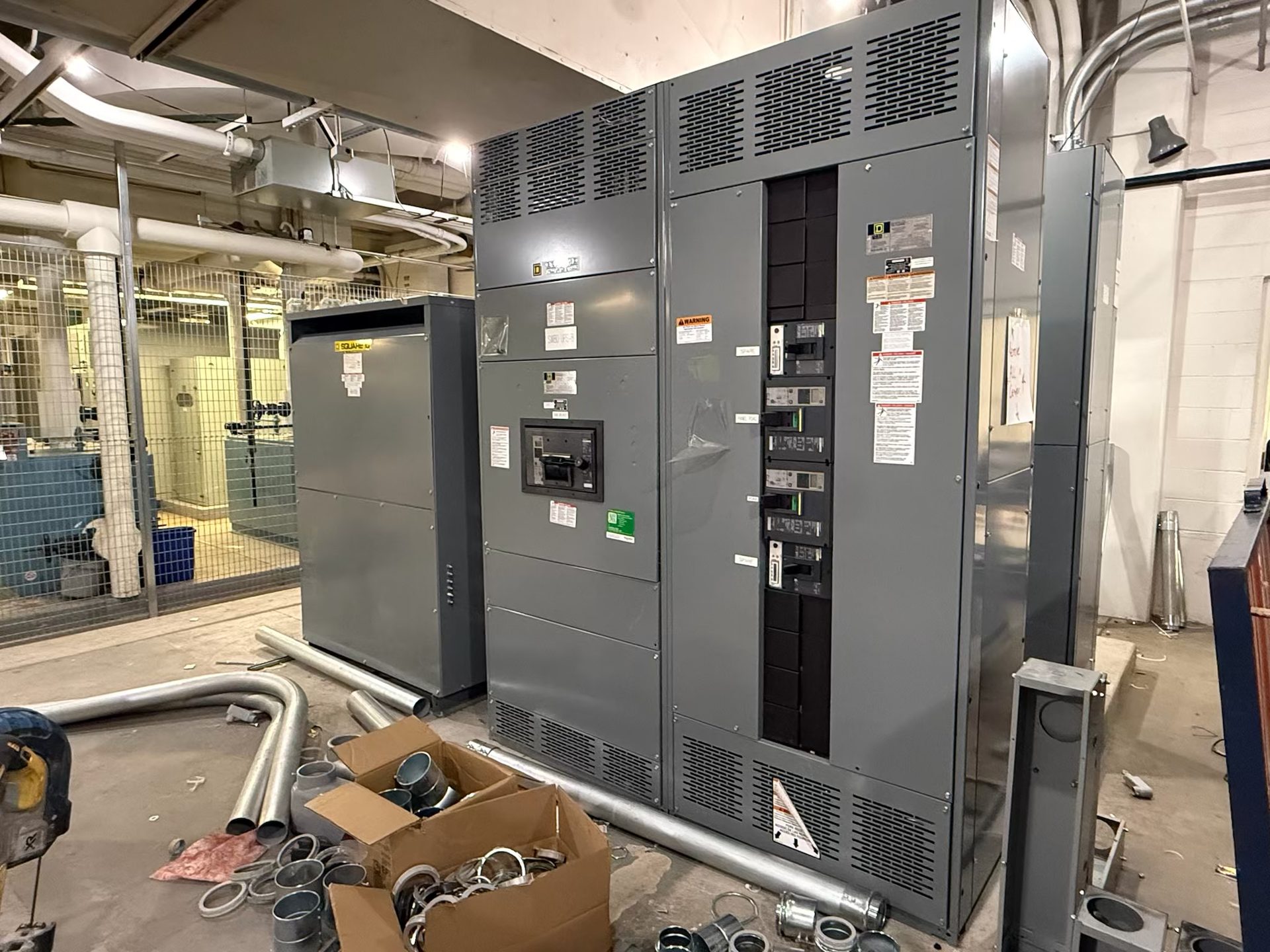
Voltage
Equipment and scope
If the available records identify equipment as 208 volts, include that value with the equipment type, manufacturer and location when requesting a quote. A voltage number alone does not identify a complete lineup, its current rating or its condition. We buy all voltage classes, and the seller is not required to verify a rating through testing.
Define what is available
The first practical question is what the proposed lot includes. Describe the type and approximate quantity of equipment, the location within the site, and whether any related components are to remain behind. If equipment is spread across buildings or storage areas, let us know. Estimates and existing documentation can start the conversation; no dismantling is necessary to make a list. For equipment identified as 208 volts, specify whether the equipment sections and associated devices are included in the proposed sale or will stay behind.
Identify the equipment safely
Nameplate photographs and a brief equipment description are a practical starting point. If you have a one-line drawing, inventory or model list already on hand, mention it as well. Avoid guessing at a voltage or opening a cabinet to read an interior label. The buyer can discuss missing information without making the seller responsible for hazardous inspection or electrical work. When identifying equipment identified as 208 volts, nameplates and existing equipment schedules can help distinguish the items without assuming every section is identical.
Tell us the present condition
Let us know whether the gear is still installed, already detached or in storage, and whether obvious components are missing. Condition can be uncertain, especially after a facility closure; an honest description is more useful than a guess. You do not have to clean, repair, energize or run the equipment for us. The buyer can consider the information available when reviewing the lot. For equipment identified as 208 volts, mention whether individual items are complete, separated or known to be missing; an unknown condition can simply be stated as unknown.
Consider access and site coordination
Site access involves more than a street location. Let us know whether the gear is behind other equipment, whether a truck can approach the building, and who can authorize entry. If you do not know those details, say so rather than arranging a move yourself. The buyer can discuss the appropriate access and lifting plan as the project scope becomes clear. If items in the lot of equipment identified as 208 volts are in separate areas, describe the locations so access can be discussed for each group.
Rigging, disconnects and freight are on us
The buyer takes responsibility for rigging and logistics: crane, disconnects, rigging, loading, freight and hauling are on us. That means the seller is not being asked to lift or ship the equipment. Tell us where the gear is and who can provide site access; we will discuss the removal approach for the particular equipment and location. If any part of the equipment identified as 208 volts is connected to equipment that will remain on site, flag that boundary for the buyer's removal plan.
Electrical safety and no seller testing
Safety comes before collecting details. The seller should not energize, test, open or disconnect equipment for the buyer, and should not treat a closed facility as proof that gear is safe to touch. Existing photographs and documents are appropriate ways to start. The buyer handles the disconnect and removal work with the relevant site contacts and qualified personnel as appropriate. For equipment identified as 208 volts, do not remove or operate components simply to confirm a label or demonstrate their condition.
How the offer and payment work
Once we understand the proposed equipment and location, we can discuss a cash offer and the terms for the sale. Payment is upfront. Because each lot and removal situation is different, an advertised universal price would not describe your equipment accurately. Ask about the offer and confirm the details that matter to you before committing. The offer for equipment identified as 208 volts is based on the actual lot, so identify any included accessories and any equipment that is excluded.
Plan around the actual project
Some projects release equipment all at once, while others involve more than one phase or location. Tell us which situation applies and whether any authorization or site coordination is pending. We can discuss timing once the scope and access conditions are understood. No specific pickup date or turnaround should be assumed until it is arranged. If not all of the equipment identified as 208 volts can be released at once, explain which items belong to each proposed phase.
Request an offer
A short description is enough to open the conversation. Call or text (614) 715-3047, or write to saleselectricalbuyers@gmail.com with your contact details, location and equipment type. Include available voltage or amperage information and safe nameplate photographs. We purchase used and surplus electrical equipment, cover freight and handle the removal logistics rather than selling equipment. When sending photographs of equipment identified as 208 volts, say whether the images show the entire lot or only selected items.