Industries
Equipment and scope
A building decommissioning project can involve a main switchboard, panelboards, transfer equipment or busway. Explain whether the equipment is in a basement, electrical room or other area, if known, and whether other tenants or work crews affect access. There is no need to remove equipment before starting the conversation. We handle all rigging and logistics: crane, rigging, disconnects, loading, freight and hauling are on us. The seller does not have to test, disconnect or move the equipment.
Define what is available
The first practical question is what the proposed lot includes. Describe the type and approximate quantity of equipment, the location within the site, and whether any related components are to remain behind. If equipment is spread across buildings or storage areas, let us know. Estimates and existing documentation can start the conversation; no dismantling is necessary to make a list. For equipment from a commercial building decommissioning project, specify whether the equipment sections and associated devices are included in the proposed sale or will stay behind.
Identify the equipment safely
Nameplate photographs and a brief equipment description are a practical starting point. If you have a one-line drawing, inventory or model list already on hand, mention it as well. Avoid guessing at a voltage or opening a cabinet to read an interior label. The buyer can discuss missing information without making the seller responsible for hazardous inspection or electrical work. When identifying equipment from a commercial building decommissioning project, nameplates and existing equipment schedules can help distinguish the items without assuming every section is identical.
Tell us the present condition
Equipment from a changeout or closure may have an incomplete history. Tell us what you know about its current location, visible completeness and whether it is attached to surrounding gear. Do not claim a working condition that has not been established, and do not perform tests on our account. The buyer will discuss the available information and the scope before making an offer. For equipment from a commercial building decommissioning project, mention whether individual items are complete, separated or known to be missing; an unknown condition can simply be stated as unknown.
Consider access and site coordination
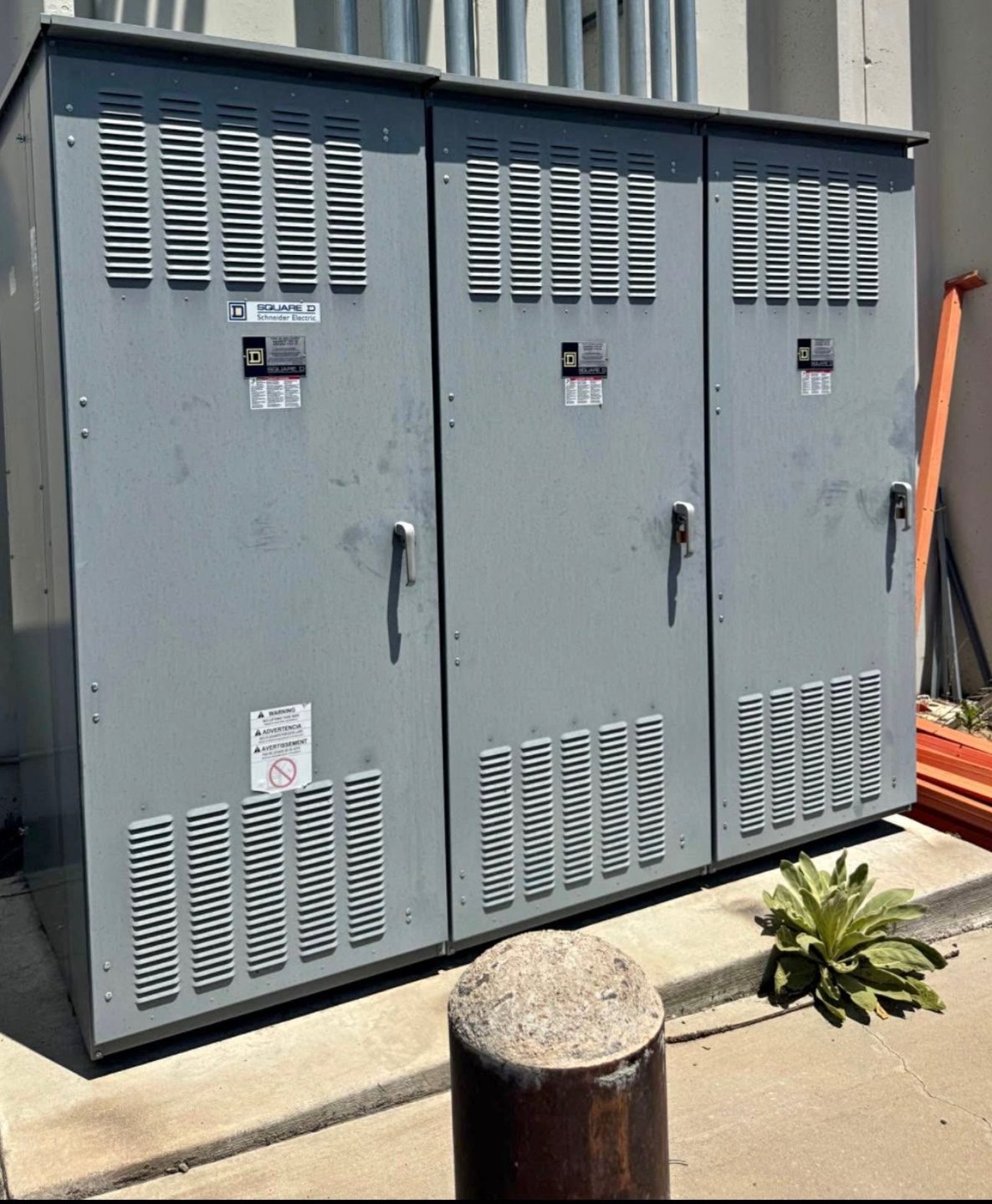
Equipment may be in an electrical room, a basement, an outdoor enclosure or a storage area. Share the location within the property and any access limitations you already know, such as a narrow doorway or another crew's work. We coordinate the removal plan with the responsible site contacts. A seller is not required to move the equipment to a dock for pickup. If items in the lot of equipment from a commercial building decommissioning project are in separate areas, describe the locations so access can be discussed for each group.
Rigging, disconnects and freight are on us
We handle all rigging and logistics. Crane, rigging, disconnects, loading, freight and hauling are on us, so the seller does not need to arrange those services or transport the gear. The exact approach depends on the equipment and the site. We coordinate the work and the necessary site details with the responsible parties rather than asking the seller to perform electrical removal. If any part of the equipment from a commercial building decommissioning project is connected to equipment that will remain on site, flag that boundary for the buyer's removal plan.
Electrical safety and no seller testing
Safety comes before collecting details. The seller should not energize, test, open or disconnect equipment for the buyer, and should not treat a closed facility as proof that gear is safe to touch. Existing photographs and documents are appropriate ways to start. The buyer handles the disconnect and removal work with the relevant site contacts and qualified personnel as appropriate. For equipment from a commercial building decommissioning project, do not remove or operate components simply to confirm a label or demonstrate their condition.
How the offer and payment work
The equipment type, identifiable ratings, completeness, location and removal scope can all inform the review of a lot. We offer cash and payment upfront, with the details discussed directly for each transaction. An initial inquiry is a way to explain what is available and request an offer, not a commitment to sell at an unstated price. The offer for equipment from a commercial building decommissioning project is based on the actual lot, so identify any included accessories and any equipment that is excluded.
Plan around the actual project
If the property is still operating or demolition is planned, explain any known access windows or dependencies. Other contractors, ownership approvals and site rules can affect coordination. We do not promise a particular turnaround without understanding those details. The buyer can work through the proposed schedule and removal plan with the seller and the appropriate site contacts. If not all of the equipment from a commercial building decommissioning project can be released at once, explain which items belong to each proposed phase.
Request an offer
Call (614) 715-3047, text nameplate photos to the same number, or email saleselectricalbuyers@gmail.com. Share your name, company, phone and email, location and equipment type, plus voltage or amperage if known. Safe photos of the lineup and its labels are helpful but are not a reason to delay if they are unavailable. We buy equipment; we do not sell it. When sending photographs of equipment from a commercial building decommissioning project, say whether the images show the entire lot or only selected items.